
The natural world resonates with an extraordinary symphony of sounds, each species contributing its own distinctive voice to the chorus of life around us. 🎵

From the haunting calls of whales traversing ocean depths to the subtle chirps of crickets on warm summer evenings, animal vocalizations serve as nature’s original communication system. These acoustic signatures are far more than random noise—they represent complex languages evolved over millennia, carrying vital information about identity, location, emotions, and intentions.
Understanding these vocal patterns opens a fascinating window into animal behavior and ecology. Scientists, conservationists, and nature enthusiasts alike have discovered that learning to identify animals by their sounds can reveal hidden populations, track migration patterns, and monitor ecosystem health without ever laying eyes on the creatures themselves.
🔊 The Science Behind Animal Vocal Signatures
Every animal species has evolved vocal characteristics shaped by its anatomy, environment, and social needs. The vocal apparatus differs dramatically across the animal kingdom—birds use a specialized organ called the syrinx, mammals employ larynxes similar to humans, while insects create sounds through stridulation or vibrating membranes.
These physical differences create unique sound frequencies, patterns, and timbres that function like biological fingerprints. A wolf’s howl resonates at different frequencies than a coyote’s, while each owl species produces hoots with distinctive rhythms and pitch variations. This specificity makes acoustic identification remarkably reliable.
Researchers in the field of bioacoustics study these sound patterns using spectrograms—visual representations of sound frequencies over time. These tools reveal intricate details invisible to the naked ear, showing harmonic structures, frequency modulations, and temporal patterns that distinguish one species from another.
Why Animals Developed Unique Voices
Natural selection has refined vocal signatures for multiple evolutionary purposes. In dense forests where visibility is limited, birds developed complex songs that carry through vegetation, allowing them to defend territories and attract mates without visual contact. Marine mammals evolved low-frequency calls that travel vast distances through water, enabling communication across oceanic expanses.
Individual recognition within species also drove vocal diversity. Many animals can identify specific family members, rivals, or potential mates through subtle variations in calls. Dolphins develop signature whistles that function like names, while penguin parents and chicks recognize each other’s voices among thousands in crowded colonies.
🐦 Identifying Birds Through Song and Call
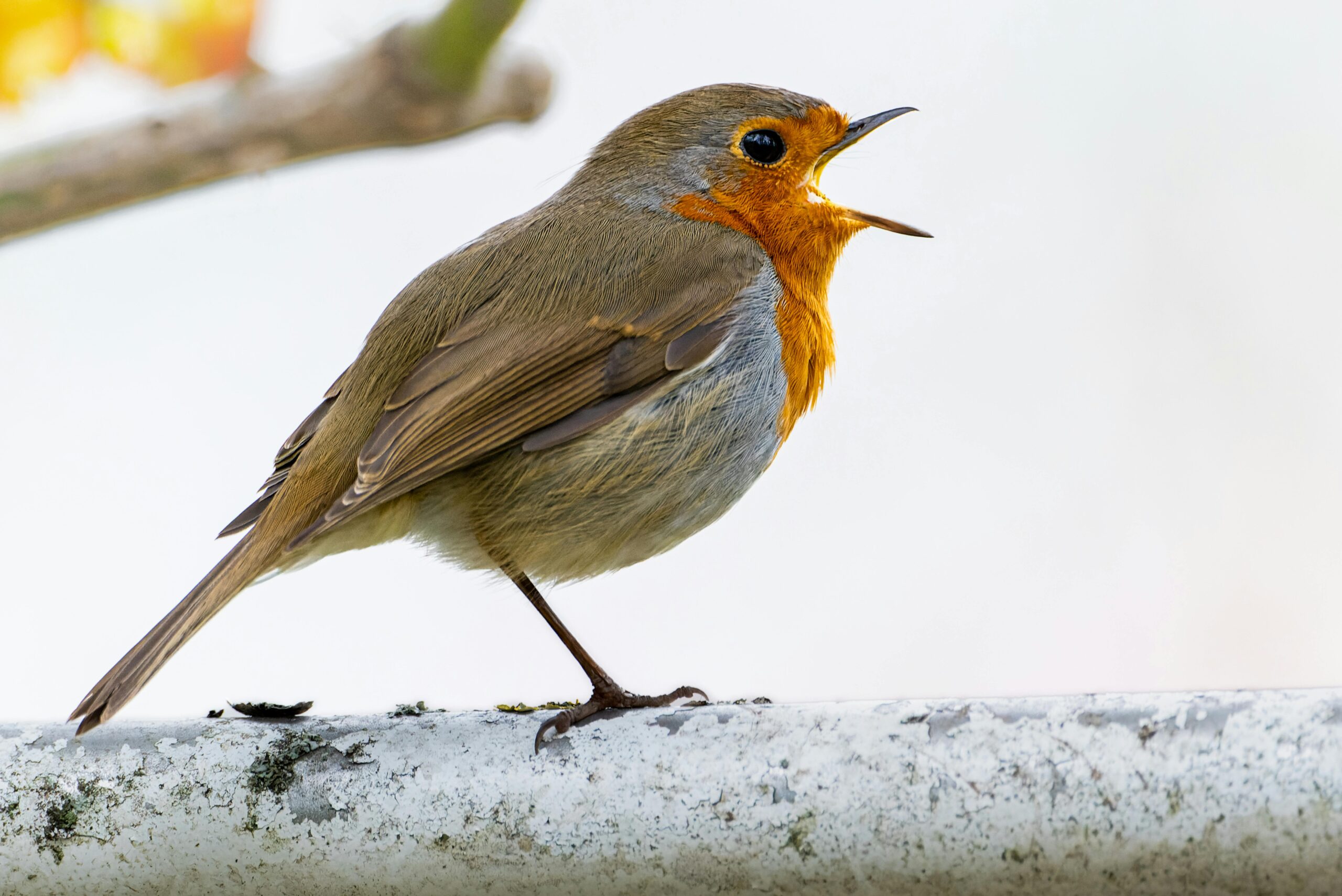
Birds represent perhaps the most vocally diverse group in the animal kingdom, with approximately 10,000 species producing an astounding variety of sounds. Ornithologists distinguish between “songs”—complex vocalizations typically used in mating and territory defense—and “calls”—shorter sounds serving immediate communication needs like alarm signals or contact notes.
Learning bird vocalizations opens identification possibilities far beyond visual observation. Many birds remain hidden in foliage but sing prominently, especially during dawn chorus when vocal activity peaks. A trained ear can identify dozens of species during a single morning walk.
Distinctive Avian Voices Worth Knowing
The American Robin produces a cheerful, caroling song often described as “cheerily, cheer-up, cheerio,” making it one of the most recognizable suburban sounds. In contrast, the Mourning Dove’s soft, mournful cooing—”coo-ah, coo, coo, coo”—creates an entirely different atmospheric quality.
Raptors like the Red-tailed Hawk produce piercing screams frequently used in movies to represent any large bird of prey. Meanwhile, the Common Loon’s haunting wails and yodels across northern lakes create one of nature’s most evocative soundscapes.
Woodpeckers communicate through drumming patterns rather than melodic songs, with each species exhibiting characteristic rhythms and speeds. The Pileated Woodpecker produces a slow, powerful drumming distinct from the rapid-fire drilling of smaller species.
🐺 Mammalian Vocal Communication
Mammals employ diverse vocalization strategies reflecting their ecological niches and social structures. Carnivores often use howls, roars, and growls for long-distance communication and territorial announcements, while prey species develop alarm calls that warn group members of danger.
Wolves exemplify sophisticated vocal communication with howls serving multiple functions—assembling pack members, announcing territory boundaries, and strengthening social bonds. Each wolf’s howl contains individual characteristics, and packs often harmonize in group choruses that researchers believe reinforce pack cohesion.
Primates and Their Complex Vocalizations
Our closest relatives demonstrate remarkable vocal complexity. Gibbons produce elaborate duets between mated pairs, with intricate patterns that strengthen pair bonds and advertise territory ownership. These songs can last fifteen minutes and carry through rainforest canopies for over a kilometer.
Chimpanzees utilize a varied vocal repertoire including pant-hoots (long-distance calls), screams (distress or excitement), and food-associated calls that inform others about feeding opportunities. Research shows these vocalizations contain referential information about specific contexts and even individual identity.
Marine Mammal Acoustic Worlds
The ocean creates unique acoustic challenges and opportunities. Sound travels approximately four times faster through water than air, and whales have evolved to exploit this property. Humpback whales produce complex songs lasting up to twenty minutes, which males repeat for hours during breeding season. These songs evolve gradually across populations, suggesting cultural transmission of vocal traditions.
Dolphins use echolocation clicks for navigation and hunting, but also employ whistles and burst-pulse sounds for social communication. Their signature whistles develop during the first year of life and remain stable throughout adulthood, functioning as acoustic name tags.
🦗 Insect and Amphibian Sound Production
Despite lacking vocal cords, insects produce remarkably loud and distinctive sounds. Crickets chirp by rubbing specialized wing structures together (stridulation), with chirp rates varying predictably with temperature—so reliably that you can estimate temperature by counting chirps.
Cicadas create their buzzing drone using tymbals—ribbed membranes on their abdomen that buckle rapidly when muscles contract. Different species produce buzzes with characteristic frequencies and patterns, creating distinct summer soundscapes across different regions.
Frog Choruses and Breeding Calls
Amphibians generate sounds using vocal sacs that amplify calls produced by their larynx. Spring evenings near wetlands fill with frog choruses, each species contributing distinct notes to the symphony. The Spring Peeper produces high-pitched “peep” sounds, while Bullfrogs emit deep “jug-o-rum” calls that carry across considerable distances.
These breeding advertisements serve dual purposes—attracting females while simultaneously declaring territory to rival males. The temporal and spectral characteristics of each call are species-specific, preventing cross-species mating attempts and allowing females to locate appropriate mates in crowded acoustic environments.
🎧 Modern Technology for Sound Identification
Digital technology has revolutionized our ability to identify animals through sound. Smartphone applications now use machine learning algorithms trained on vast audio databases to identify species from recordings. These tools democratize expertise previously requiring years of field experience.
Acoustic monitoring equipment deployed in remote locations continuously records environmental sounds, creating massive datasets that researchers analyze for species presence, population trends, and ecosystem changes. This passive monitoring approach minimizes disturbance while gathering information impossible to obtain through visual surveys alone.
How Sound Identification Apps Work
Modern identification applications employ sophisticated neural networks trained on thousands of verified recordings. When you record an animal sound, the app analyzes multiple acoustic parameters—frequency range, temporal patterns, harmonic structure—and compares these against its database to suggest likely matches.
The accuracy of these systems continues improving as databases expand and algorithms become more refined. However, they work best with clear recordings of prominent vocalizations, struggling with distant, overlapping, or degraded sounds that human experts might decipher through contextual knowledge.
🌍 Conservation Applications of Acoustic Monitoring
Identifying animals through vocal signatures has become an invaluable conservation tool. Acoustic surveys can detect rare or cryptic species that evade visual detection, providing crucial data for conservation planning. Researchers have discovered previously unknown populations of endangered species through systematic sound recording and analysis.
Monitoring changes in soundscape composition over time reveals ecosystem health trends. Declining diversity in acoustic signatures may indicate habitat degradation, while recovering soundscapes suggest successful restoration efforts. This approach provides objective, quantifiable metrics for assessing conservation interventions.
Combating Wildlife Crime Through Sound
Innovative acoustic monitoring systems help combat poaching and illegal logging. Microphone arrays deployed in protected areas can detect gunshots or chainsaw sounds, triggering alerts to law enforcement. Some systems also monitor for the presence of target species, helping rangers protect specific populations from threats.
🎓 Developing Your Own Acoustic Identification Skills
Learning to identify animals by sound requires patience and systematic practice, but offers deeply rewarding experiences. Begin by focusing on common species in your local area, learning a few distinctive voices thoroughly before expanding your repertoire.
Mnemonics help cement vocal patterns in memory. Birders traditionally use phrases that mimic song patterns—”drink your tea” for Eastern Towhees or “who cooks for you” for Barred Owls. Creating your own memory aids personalizes the learning process and improves retention.
Practice Strategies for Sound Learning
Regular exposure builds recognition faster than sporadic study. Spend time outdoors listening actively, attempting to isolate individual sounds from the acoustic background. Focus initially on the most obvious, loudest vocalizations before training your ear to detect subtle, distant, or quiet sounds.
Recording and reviewing sounds at home allows careful analysis impossible in the field. Slow playback reveals details that pass too quickly at normal speed, while spectrograms provide visual reinforcement of acoustic patterns. Comparing your recordings against reference libraries builds confidence in identification accuracy.
🔬 The Future of Bioacoustic Research
Emerging technologies promise to transform our understanding of animal communication. Artificial intelligence systems can now process years of continuous recordings in hours, identifying patterns and trends invisible to human analysts. These tools may reveal undiscovered aspects of animal behavior and communication complexity.
Researchers are exploring whether animal vocalizations contain more sophisticated information than previously recognized. Some studies suggest that certain species may have proto-grammatical structures in their calls, with different elements combined in meaningful sequences. As analytical methods improve, we may discover that animal “languages” are more complex than we imagined.
Citizen Science and Acoustic Data Collection
Public participation in acoustic monitoring continues expanding. Citizen scientists contribute recordings to global databases, vastly expanding the geographic and temporal scope of available data. These crowdsourced observations help track range shifts related to climate change, document migration timing changes, and discover unusual occurrences.
The democratization of bioacoustic tools empowers people worldwide to contribute meaningful conservation data while deepening their connection with local wildlife. This engagement fosters environmental stewardship as participants develop awareness of the acoustic richness surrounding them.
🎵 The Symphony of Biodiversity
Understanding animal vocal signatures enriches our experience of natural environments, transforming undifferentiated noise into meaningful communication. Each voice tells a story of evolutionary adaptation, ecological relationships, and individual experience. Learning this acoustic language connects us more deeply with the living world.
Whether you’re a serious researcher, dedicated naturalist, or casual nature enthusiast, developing acoustic identification skills opens new dimensions of wildlife observation. The sounds surrounding us contain far more information than we typically perceive, waiting for attentive ears to decode their messages.
As human activities increasingly alter natural soundscapes through noise pollution and habitat destruction, the ability to document and understand animal vocalizations becomes ever more critical. These sounds represent not just identification tools but irreplaceable expressions of life’s diversity—a biological heritage deserving preservation and celebration.
The next time you step outdoors, pause and listen carefully. Behind the familiar background hum lie countless distinct voices, each contributing unique notes to Earth’s grand chorus. Learning to recognize these signatures transforms every walk into an acoustic adventure, revealing hidden wildlife and deeper connections with the vibrant world of sound surrounding us. 🌿