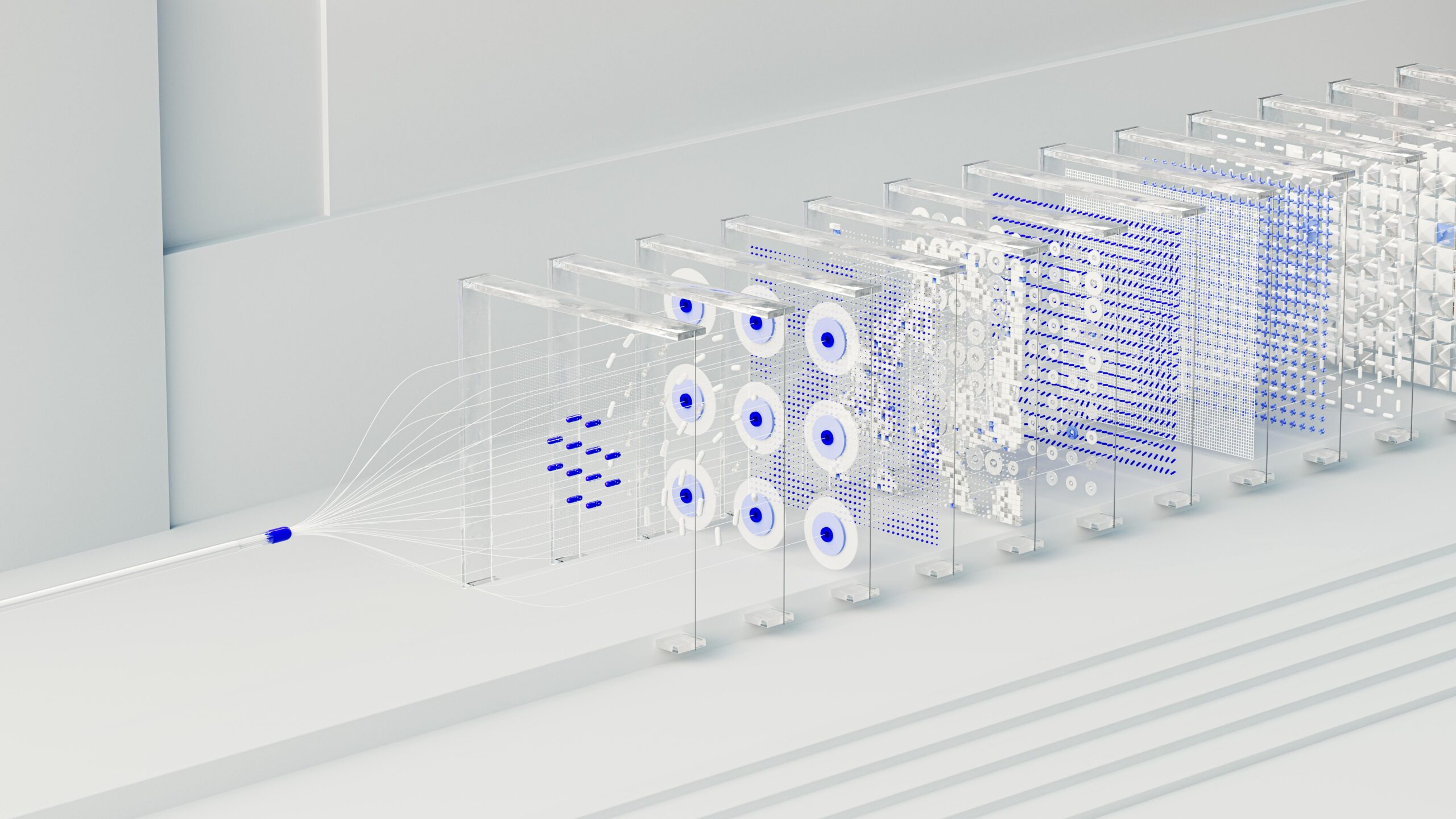
Deep learning is transforming acoustic tracking systems, enabling unprecedented accuracy in monitoring marine life, underwater vehicles, and environmental changes with revolutionary computational intelligence.

🔊 The Dawn of Intelligent Acoustic Monitoring
Acoustic tracking has long been a cornerstone of marine research, military operations, and industrial applications. Traditional methods relied heavily on manual signal processing and rule-based algorithms that struggled with complex underwater environments. The introduction of deep learning has fundamentally altered this landscape, offering adaptive systems that learn from vast datasets and improve continuously.
The underwater realm presents unique challenges for tracking systems. Sound waves behave differently depending on water temperature, salinity, pressure, and biological activity. Conventional acoustic tracking required extensive calibration and often failed in noisy environments or when dealing with multiple simultaneous targets. Deep learning models, particularly convolutional neural networks and recurrent architectures, have demonstrated remarkable capabilities in distinguishing signal patterns from background noise.
Modern acoustic tracking systems powered by artificial intelligence can process thousands of simultaneous signals, identify individual marine animals by their unique acoustic signatures, and predict movement patterns with stunning accuracy. This technological leap has opened new frontiers in oceanographic research, wildlife conservation, and underwater navigation.
🧠 Neural Networks: The Backbone of Modern Acoustic Analysis
At the heart of revolutionary acoustic tracking lies sophisticated neural network architectures designed specifically for temporal and spatial signal processing. Convolutional neural networks excel at identifying patterns in spectrograms—visual representations of sound frequencies over time. These networks automatically learn to recognize features that human analysts might miss or take years to identify.
Recurrent neural networks, particularly Long Short-Term Memory (LSTM) networks, handle the temporal aspects of acoustic signals exceptionally well. They maintain memory of previous signal states, allowing them to track objects continuously even when signals are temporarily interrupted or degraded. This capability proves invaluable in real-world scenarios where acoustic paths are obstructed by thermal layers, marine vegetation, or geological formations.
Transformer architectures, which revolutionized natural language processing, are now being adapted for acoustic tracking applications. Their attention mechanisms allow the system to focus on relevant signal components while ignoring irrelevant noise, dramatically improving tracking precision in cluttered acoustic environments.
Training Paradigms for Acoustic Intelligence
Training deep learning models for acoustic tracking requires massive datasets containing labeled examples of target signals under various environmental conditions. Researchers have developed innovative approaches including supervised learning with manually annotated tracks, semi-supervised methods that leverage unlabeled data, and self-supervised techniques that learn representations from the data itself.
Transfer learning has emerged as a powerful strategy, allowing models trained on abundant terrestrial audio data to be fine-tuned for underwater applications. This approach significantly reduces the data requirements for specialized acoustic tracking tasks and accelerates deployment in new environments.
🌊 Real-World Applications Transforming Industries
Marine biology has experienced perhaps the most dramatic transformation through deep learning-enhanced acoustic tracking. Scientists can now monitor individual whales across ocean basins, studying migration patterns, social behaviors, and responses to environmental changes with unprecedented detail. Automated systems continuously analyze hydrophone arrays, identifying species by their vocalizations and tracking population dynamics in real-time.
Fish stock assessment, traditionally requiring expensive vessel surveys, now benefits from permanent acoustic monitoring stations equipped with deep learning processors. These systems distinguish between species based on swim bladder resonances and schooling behaviors, providing continuous data that informs sustainable fisheries management.
Naval and Security Applications
Military and security operations have rapidly adopted deep learning for submarine detection, harbor protection, and maritime domain awareness. Neural networks trained on classified acoustic signatures can identify vessel types, estimate speeds, and predict trajectories with classified accuracy levels that far exceed traditional sonar analysis.
Autonomous underwater vehicles (AUVs) now navigate using acoustic tracking systems enhanced by deep learning, allowing them to operate in GPS-denied environments. These vehicles can track their position relative to seabed features, avoid obstacles, and coordinate with other vehicles through acoustic communication networks intelligently managed by neural algorithms.
Environmental Monitoring and Climate Research
Climate scientists employ acoustic tracking enhanced by deep learning to monitor ice sheet dynamics, detecting calving events and measuring ice thickness changes. Underwater acoustic sensors equipped with intelligent processing can distinguish between various ice-related acoustic signatures, providing early warnings of significant events.
Ocean temperature and current measurements benefit from acoustic tomography systems that use deep learning to interpret complex signal propagation patterns. These systems map large-scale ocean features with spatial and temporal resolutions impossible to achieve through traditional sampling methods.
📊 Precision Metrics: Quantifying the Revolutionary Leap
The performance improvements delivered by deep learning in acoustic tracking are measurable and substantial. Traditional methods typically achieved localization accuracies within 10-50 meters under favorable conditions, degrading rapidly with distance and environmental complexity. Deep learning systems consistently achieve sub-meter accuracy even in challenging scenarios.
| Metric | Traditional Methods | Deep Learning Systems |
|---|---|---|
| Position Accuracy | 10-50 meters | 0.5-5 meters |
| Multi-target Capacity | 5-10 simultaneous | 100+ simultaneous |
| False Positive Rate | 15-30% | 2-5% |
| Processing Speed | Near real-time | Real-time with latency <100ms |
| Environmental Adaptability | Requires recalibration | Automatically adapts |
Detection range has expanded significantly as deep learning models extract weak signals from noise that would completely obscure targets in conventional systems. Reports indicate range improvements of 50-200% depending on environmental conditions and target characteristics.
⚡ Efficiency Gains Reshaping Operational Economics
Beyond accuracy improvements, deep learning has dramatically enhanced the operational efficiency of acoustic tracking systems. Automated analysis eliminates the need for teams of trained specialists to manually review acoustic data, reducing labor costs by up to 90% while simultaneously improving coverage and response times.
Energy efficiency has improved through intelligent sensor management. Deep learning algorithms determine when and where to activate sensors, how to configure them for optimal performance, and when to enter low-power modes. Battery-powered monitoring stations now operate for years instead of months, reducing maintenance costs and environmental impact.
Data compression represents another efficiency frontier. Neural networks can compress acoustic data by identifying and preserving only the most informative features, reducing transmission bandwidth requirements by factors of 10-100. This capability is crucial for real-time systems using expensive satellite or acoustic communication links.
Scalability Through Cloud and Edge Computing
Modern acoustic tracking architectures distribute processing between edge devices and cloud infrastructure. Lightweight neural networks run on sensors themselves, performing initial classification and tracking. Complex analysis requiring more computational resources occurs in the cloud, where models continuously improve through learning from global datasets.
This hybrid approach enables systems to scale from single-sensor deployments to global networks encompassing thousands of monitoring points, all feeding data into centralized intelligence platforms that detect patterns invisible to localized systems.
🔬 Cutting-Edge Research Pushing Boundaries Further
Research laboratories worldwide are developing next-generation acoustic tracking capabilities that push beyond current limitations. Generative adversarial networks (GANs) create synthetic training data that supplements limited real-world recordings, enabling models to learn to handle rare events and unusual environmental conditions.
Physics-informed neural networks incorporate fundamental acoustic propagation equations directly into their architecture, combining data-driven learning with physical laws. These hybrid models generalize better to new environments and require less training data than purely empirical approaches.
Few-shot learning techniques allow systems to recognize new acoustic signatures from just a handful of examples, dramatically accelerating the process of adapting tracking systems to monitor new species or vehicle types. Meta-learning approaches enable models to learn how to learn, becoming increasingly efficient at acquiring new capabilities.
Quantum Computing on the Horizon
Although still in early stages, quantum computing promises to revolutionize acoustic signal processing. Quantum algorithms could solve optimization problems inherent in multi-target tracking exponentially faster than classical computers, enabling perfect tracking of thousands of targets simultaneously in real-time.
Research groups are developing quantum neural networks specifically designed for signal processing applications. While practical deployment remains years away, proof-of-concept demonstrations suggest transformational capabilities that will further revolutionize acoustic tracking.
🛠️ Implementation Challenges and Practical Solutions
Deploying deep learning for acoustic tracking is not without challenges. Data quality and quantity remain primary concerns—neural networks require substantial training data representing the full diversity of target signals and environmental conditions. Organizations must invest in data collection infrastructure and curation processes.
Computational requirements can be substantial, particularly for real-time processing of high-frequency acoustic data from multiple sensors. Hardware accelerators including GPUs and specialized AI chips have become essential components of modern acoustic tracking systems, adding cost and complexity.
Model interpretability poses challenges in safety-critical applications. Deep neural networks are often “black boxes” whose decision-making processes are opaque. Researchers are developing explainable AI techniques that provide insight into why models make particular tracking decisions, building trust and facilitating regulatory approval.
Addressing Environmental and Ethical Considerations
Acoustic monitoring systems can potentially disturb marine life through active sonar transmissions. Deep learning enables passive tracking that relies solely on ambient sounds and target-generated noise, eliminating this concern in many applications. When active acoustics are necessary, intelligent systems minimize transmission power and frequency, reducing environmental impact.
Privacy concerns arise when acoustic tracking systems capable of monitoring human activities are deployed. Establishing clear policies regarding data collection, storage, and usage ensures that technological capabilities are exercised responsibly and ethically.
🚀 Future Trajectories in Acoustic Intelligence
The trajectory of deep learning in acoustic tracking points toward increasingly autonomous, adaptive, and intelligent systems. Future platforms will continuously learn from operational experience, improving performance without human intervention. Collaborative tracking networks will share knowledge, with insights gained in one location benefiting systems globally.
Integration with other sensing modalities will create comprehensive environmental awareness systems. Acoustic tracking combined with optical imaging, chemical sensing, and oceanographic measurements through multi-modal deep learning will provide holistic understanding of underwater environments previously impossible to achieve.
Miniaturization enabled by specialized AI hardware will embed sophisticated tracking capabilities in devices the size of coins, enabling ubiquitous monitoring networks with minimal environmental footprint. These “smart dust” sensors will form adaptive meshes that self-organize to track targets of interest while conserving resources.

💡 Transforming Ocean Science and Beyond
Deep learning has fundamentally revolutionized acoustic tracking, delivering precision and efficiency improvements that seemed impossible just a decade ago. From monitoring endangered species to enabling autonomous navigation and advancing climate science, the applications touch virtually every aspect of ocean interaction.
The technology continues evolving at remarkable pace, with new architectures, training methods, and hardware platforms emerging continuously. Organizations investing in deep learning-enhanced acoustic tracking position themselves at the forefront of ocean technology, equipped with capabilities that will define the next generation of marine research, conservation, and operations.
As neural networks grow more sophisticated and computational resources more accessible, the barriers to deploying advanced acoustic tracking systems continue to fall. The revolution in underwater monitoring has only begun, with the most transformative applications yet to be imagined and implemented.
The convergence of deep learning and acoustic tracking represents more than incremental improvement—it constitutes a paradigm shift in humanity’s ability to understand and interact with underwater environments. This technological revolution provides tools essential for addressing pressing challenges from biodiversity loss to climate change, while opening new possibilities for sustainable ocean use and scientific discovery.